

- Admitted
- August 24, 2026
- Rescue Location
- Rockbridge County
- Cause of Admission/Condition
- Vehicle Collision
- Status
- Current Patient

Last Updated Jump to patient updates
On August 24, a Bobcat kitten in Rockbridge County was found injured in the middle of the road. A member of the public quickly and safely contained the injured kitten and transported her to the Wildlife Center for care.
On admission, the Bobcat was dull and had difficulty using her right forelimb. While no obvious injuries were visible on her physical exam, radiographs revealed the cause of her discomfort: a fracture of her right shoulder blade. The bone was broken into several pieces, with some of the fragments displaced from their normal position.
Given the location of the fracture and the stability of the shoulder joint, the veterinary team determined that the bone had a good chance of healing without surgery. The Bobcat was started on pain medication and anti-inflammatory medication and placed in a Zinger crate in the Center’s Acclimation enclosure, where she could rest and recover.
On September 1, the Bobcat was moved to the left side of the Center’s Large Mammal Isolation enclosure, where she continued to rest in a Zinger crate. Moving her to LMI allowed her to begin acclimating to the presence of the Center's other Bobcat (Bobcat #26-3064) housed in the neighboring enclosure. The veterinary team continued to monitor her closely via camera, and despite her injury, she was quite active!
Initially, the Bobcat was observed limping, but over the next two weeks, staff noted that she was using her injured limb well. On September 28, the veterinary team anesthetized her for a checkup and were pleased to see that the fracture had fully healed!

The Bobcat is no longer on crate rest and was moved to the LMI enclosure's chute, where she can continue acclimating to Bobcat #26-3064. If all goes well, staff hope to place the two Bobcats together soon.
Want to follow along with this Bobcat’s rehabilitation? You can now watch her and Bobcat #26-3064 live on the Center’s Critter Cams!
Patient Updates
After months of care at the Center, Bobcats #26-3064 and #26-3631 were successfully released back into the wild at a remote location in Nelson County. The Center's rehabilitation team, in collaboration with biologists from the Department of Wildlife Resources, selected the site for its remoteness, excellent habitat, and abundant food resources.
When staff opened the crates today, the first female wasted no time and darted straight out into the wild. The second female was a bit more cautious and took a little longer to exit, before she too pounced out of the crate. Both Bobcats quickly disappeared into their new habitat.
Check out this video captured from the release!
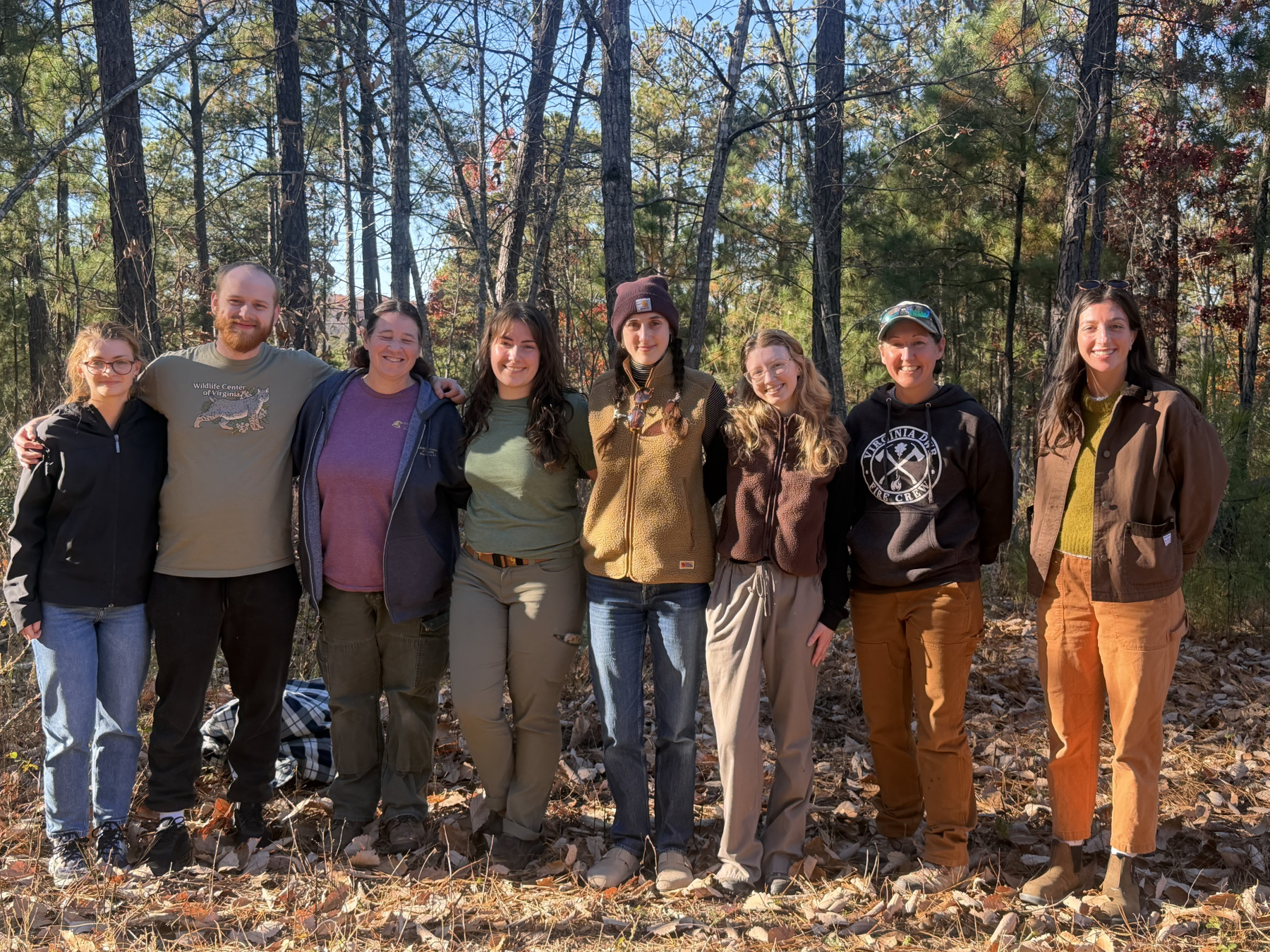


After nearly three months of specialized care and rehabilitation, the Wildlife Center’s two young Bobcats (#26-3064 and #26-3631) are ready to return to the wild. Staff plan to release both felines on Wednesday, November 18, in Nelson County in collaboration with biologists from the Virginia Department of Wildlife Resources (DWR).
In recent weeks, the rehabilitation team focused heavily on ensuring both young Bobcats possessed the natural instincts needed to survive on their own. Staff implemented a "hunting experience" inside their Large Mammal Isolation enclosure, which included daily scent trails and environmental stimuli to encourage foraging and tracking. Remote camera monitoring confirmed that both Bobcats actively followed scent trails, and live-prey evaluations proved they can successfully capture and dispatch their own food. Physical assessment by the veterinary team confirmed both animals' bodies are strong with healthy winter coats, and both demonstrate appropriate avoidance behaviors when caregivers are present.
Because young Bobcats in Virginia naturally disperse in either the fall or spring, the Center’s team consulted closely with DWR biologists to weigh the benefits of a fall release against overwintering the pair at the Center until spring. Holding young wild felines in captivity for an additional four months carries the risk of stress-induced behaviors or gradual habituation to human presence. Together, the Center and DWR determined that releasing the pair now best mimics natural fall dispersal and gives them the greatest chance of long-term success.
DWR biologists selected a remote release location within Nelson County that offers suitable habitat coverage and small mammal populations these young predators will need as they begin hunting. Staff will transport the young bobcats on Wednesday, aiming to have them on the road toward their new home by the afternoon.
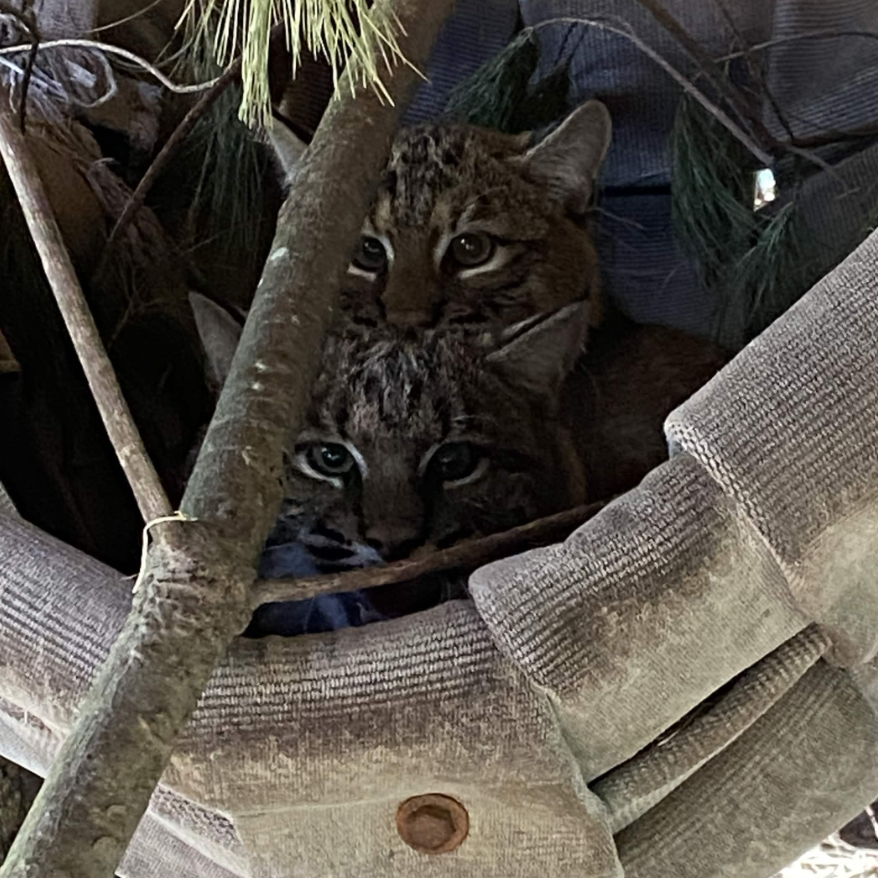 During the past three weeks, the rehabilitation team has closely monitored the Bobcats via remote cams and has observed positive interactions through the chute. On October 15, staff opened the chute to allow the two Bobcats to be together for the first time. The introduction went well, and the Bobcats have since been observed playing and spending time together throughout the day. The team even caught the two snuggled up together in the hammock!
The rehab team is currently feeding the Bobcats a variety of whole-prey items, including fish, rats, chicks, quail, and chicken. On Saturdays, the team has also begun offering live prey (mice) inside the tubs in their enclosure. The tubs are filled with leaves and other natural debris to simulate natural conditions and provide the Bobcats with opportunities to practice stalking and hunting. Bobcat #26-3631 has been observed catching mice; Bobcat #26-3064 has shown interest but hasn't successfully captured one yet.
Rehabilitation staff are continuing to assess whether the Bobcats will be ready for release this fall or require more time to grow and develop. The team plans to reassess their progress in early November.